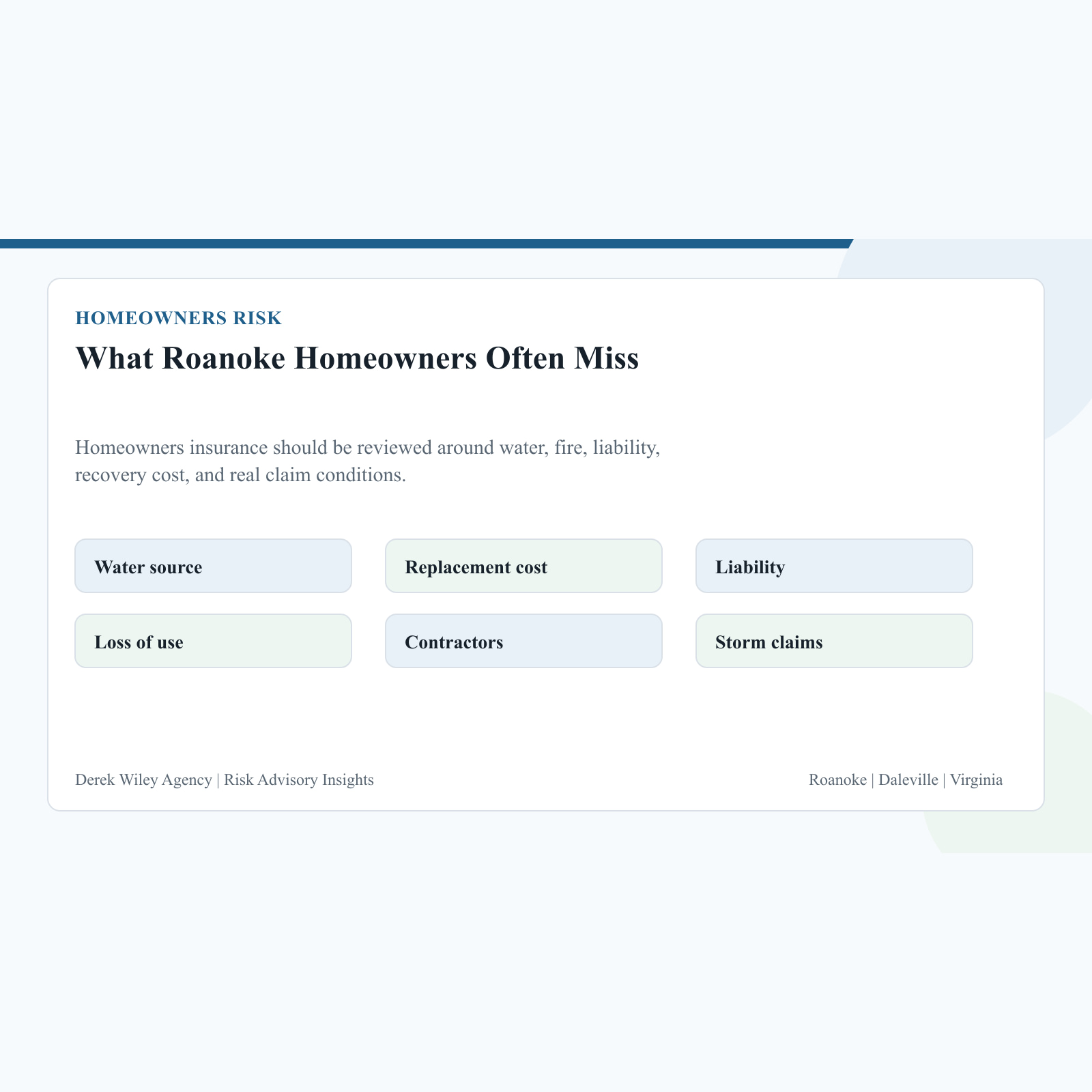
What Roanoke Homeowners Often Miss in Their Insurance Coverage
Homeowners insurance is often purchased because a lender requires it. That is the first problem.
A mortgage company wants proof that a policy exists. A homeowner needs something more useful: coverage that has been reviewed around what could actually happen to the home, the people who live there, the guests who visit, the contractors who come onto the property, and the cost of recovering after a serious loss.
For homeowners in Roanoke and across Virginia, that means looking beyond the premium and the dwelling number on the declarations page. It means asking whether the policy would respond the way you expect after storm damage, water in the basement, a liability claim, a fire, a service-line issue, or a major repair project.
Outside water is one of the easiest risks to misunderstand.
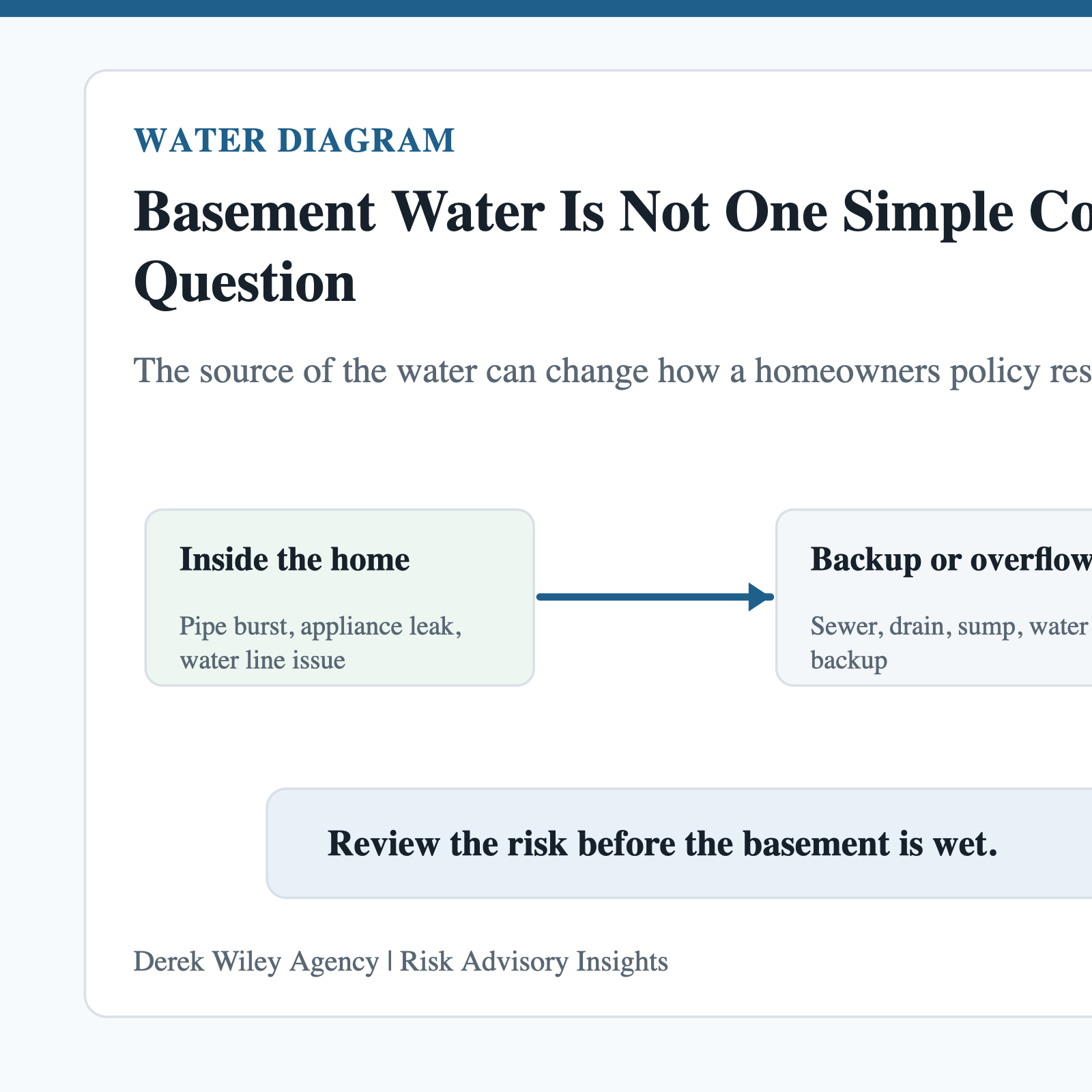
One of the most common homeowner assumptions is simple: “If water damages my house, homeowners insurance should cover it.”
That is not always how the policy works.
Derek has told the story of a severe local storm where water overwhelmed culverts and poured into a neighbor’s basement. People nearby naturally assumed the damage would be covered. The harder truth was that water coming from outside the home can be treated very differently from water that starts inside the home. Depending on the facts and policy, it may fall into flood, surface water, water backup, sump overflow, or other coverage categories.
That distinction matters because a homeowner can have a policy, have serious damage, and still discover that the specific kind of water loss is limited or excluded.
Flood insurance itself can also be more nuanced than people expect. It may have definitions and limitations that do not match the way a homeowner casually uses the word “flood.” That is why Derek Wiley Agency tries to review water exposure before the storm, not after there is standing water in the basement.
This is also why a homeowners review should not start and stop with the cheapest insurance quote. The source of the water, the policy language, and the endorsements matter more than the premium after the loss has already happened.
Replacement cost is not the same as market value.
Another common issue is confusing what a home is worth on the market with what it would cost to rebuild.
Market value is affected by location, school district, lot, neighborhood demand, interest rates, and comparable sales. Replacement cost is about labor, materials, debris removal, code requirements, construction access, inflation, and the cost to rebuild the structure after a covered loss.
A home in Roanoke may sell for one number and cost a very different number to reconstruct. That gap can become painful after a fire or severe storm if the dwelling limit was based on a purchase price, tax assessment, old policy, or guess.
A homeowners review should ask what it would take to rebuild and recover, not just what the house was bought for.
Storm claims create timing problems, not just coverage problems.
Southwest Virginia does not face the same storm profile as every part of the country, but local homeowners have seen wind, tornado, water, and widespread property damage events. WDBJ7 has covered storm-claim issues in the region, including the importance of documenting damage, mitigating further loss, and being careful with contractors after major storms.
When many homeowners need help at once, the claim process can become slower and more stressful. Contractors, remediation companies, adjusters, roofers, and repair crews may all be overloaded. That is one reason local advice matters. The question is not only “is there coverage?” It is also “what should I do first, what should I document, and who can help me avoid making the damage worse?”
That practical side is part of Derek Wiley Agency’s value. Derek’s claims background and local experience shape the way the agency talks to clients before and during claim situations.
Liability at the home is often under-reviewed.
Homeowners insurance is not only about the building. Liability coverage can matter when someone is injured on the property or when an ordinary household situation creates a legal claim.
That can involve guests, pets, children, contractors, rented spaces, parties, pools, decks, stairs, trampolines, ATVs, or someone temporarily staying at the home. It can also involve favors that feel harmless in the moment: storing property for someone, pet sitting, letting someone borrow space, or hiring a worker for a project.
A good homeowners review should ask whether the liability limits make sense and whether the household should also discuss personal umbrella insurance.
Contractors and service providers can bring risk onto your property.
Homeowners hire landscapers, painters, plumbers, electricians, roofers, cleaners, handymen, and remodelers all the time. Most of the time, nothing goes wrong. But when someone is injured or causes damage, the insurance details can become important quickly.
Derek Wiley Agency often advises clients to think about whether people working on the property are licensed, insured, and carrying their own coverage. For some projects, it may be appropriate to ask for proof of general liability, workers’ compensation, or additional insured status. That is not because every small project needs legal complexity. It is because a homeowner should not casually absorb a risk that belongs to someone else’s business.
A homeowners review should be specific to your home.
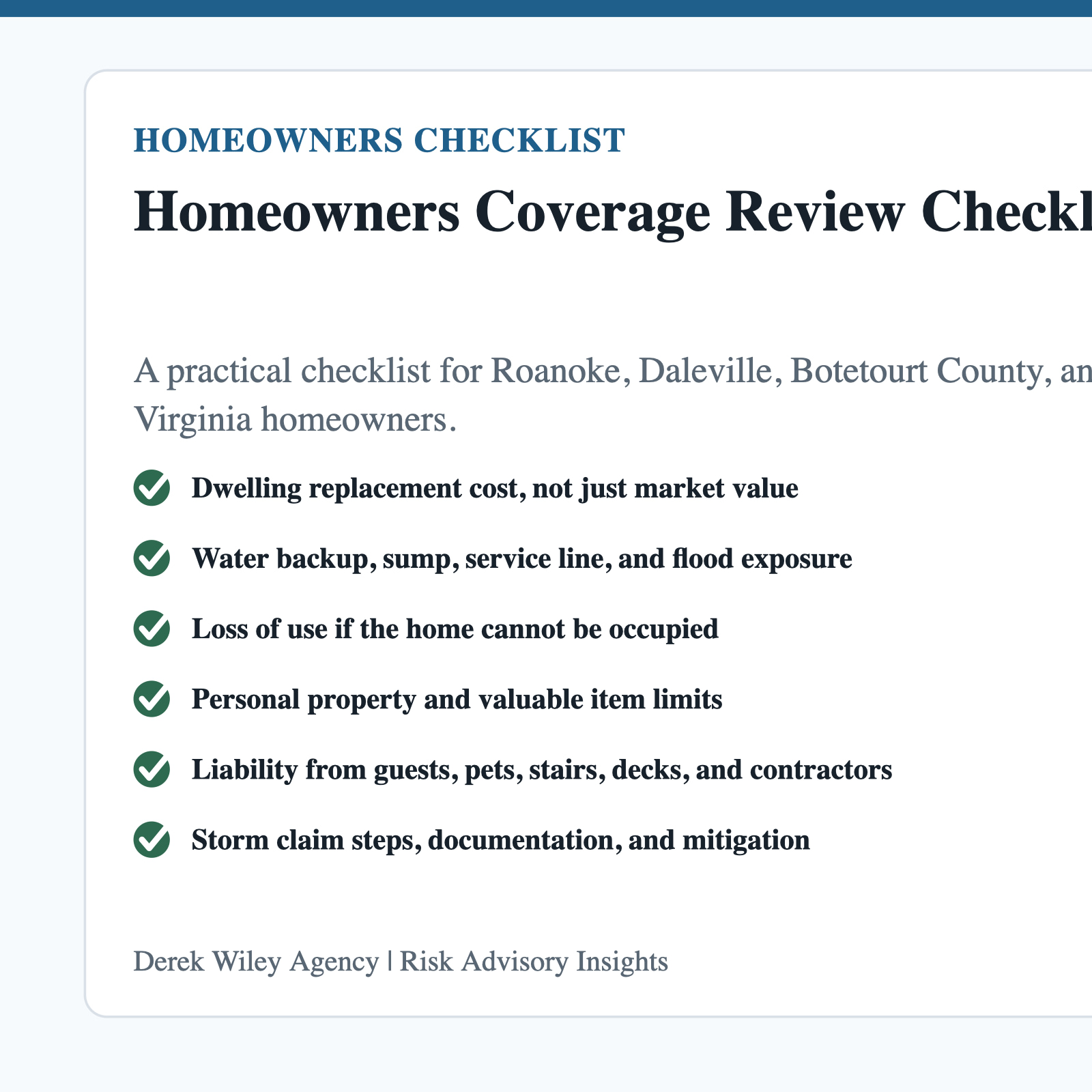
Generic coverage advice does not account for the way a real property is used. A useful review should consider questions like:
- Do you have a basement, sump pump, or drainage concern?
- Are there detached structures, outbuildings, or special property?
- Would the current limit rebuild the home after a major loss?
- Do you host guests, rent part of the property, or use the home for business?
- Are there pets, pools, stairs, decks, or other liability issues?
- Do you own valuables that may need scheduled coverage?
- Would loss of use coverage be enough if you had to live elsewhere?
That is the difference between holding a policy and understanding your protection.
For households with meaningful equity, income, young drivers, or frequent guests, the homeowners conversation should also connect to umbrella policy asset protection instead of treating liability as a small line item.
What to do next.
If your homeowners policy has not been reviewed around water, replacement cost, liability, loss of use, and real claim scenarios, start there.
Derek Wiley Agency helps homeowners in Roanoke and across Virginia review homeowners insurance through an independent-agency, risk-advisory approach. The goal is to understand what could go wrong before a claim forces the issue.
Related protection may include flood insurance, personal umbrella insurance, high-value property coverage, or a broader Strategy Call.
FAQs
Does homeowners insurance cover water coming into a basement from outside?
Not always. Water that enters from outside may be treated differently than water that originates inside the home. Coverage depends on the policy, source of water, endorsements, exclusions, and whether separate flood or water-related coverage applies.
Why is replacement cost different from market value?
Market value is what a home may sell for. Replacement cost is what it may cost to rebuild after a covered loss, including labor, materials, code requirements, and construction conditions.
What homeowners coverage should Roanoke homeowners review before storm season?
Homeowners should review dwelling limits, roof and wind/hail provisions, deductibles, water backup, sump overflow, flood exposure, loss of use, tree damage assumptions, and contractor documentation steps.
When should homeowners consider umbrella insurance?
Umbrella insurance should be discussed when a household has meaningful assets, home equity, income, young drivers, rental exposure, frequent guests, pets, or other liability concerns that may exceed standard homeowners limits.